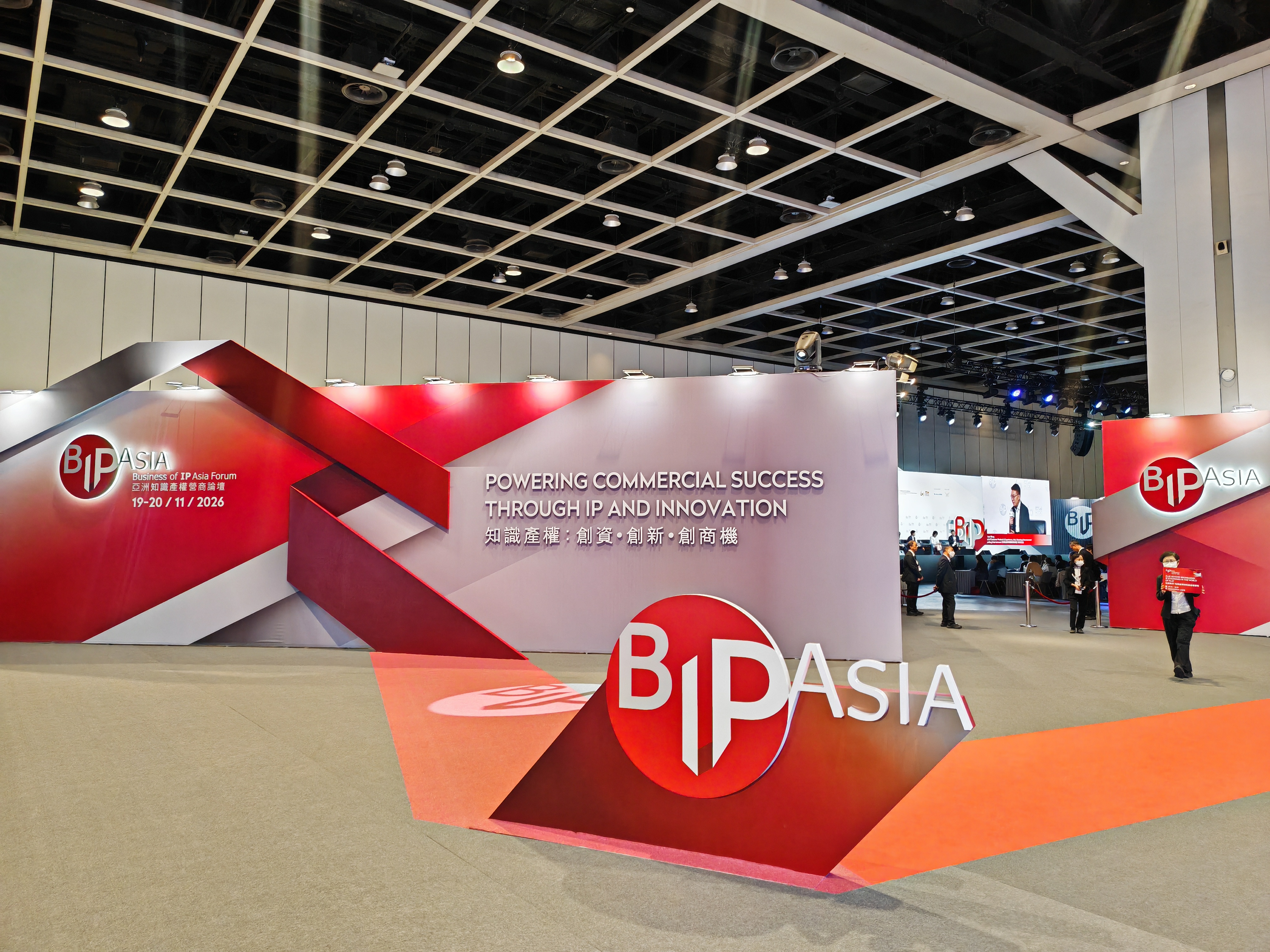
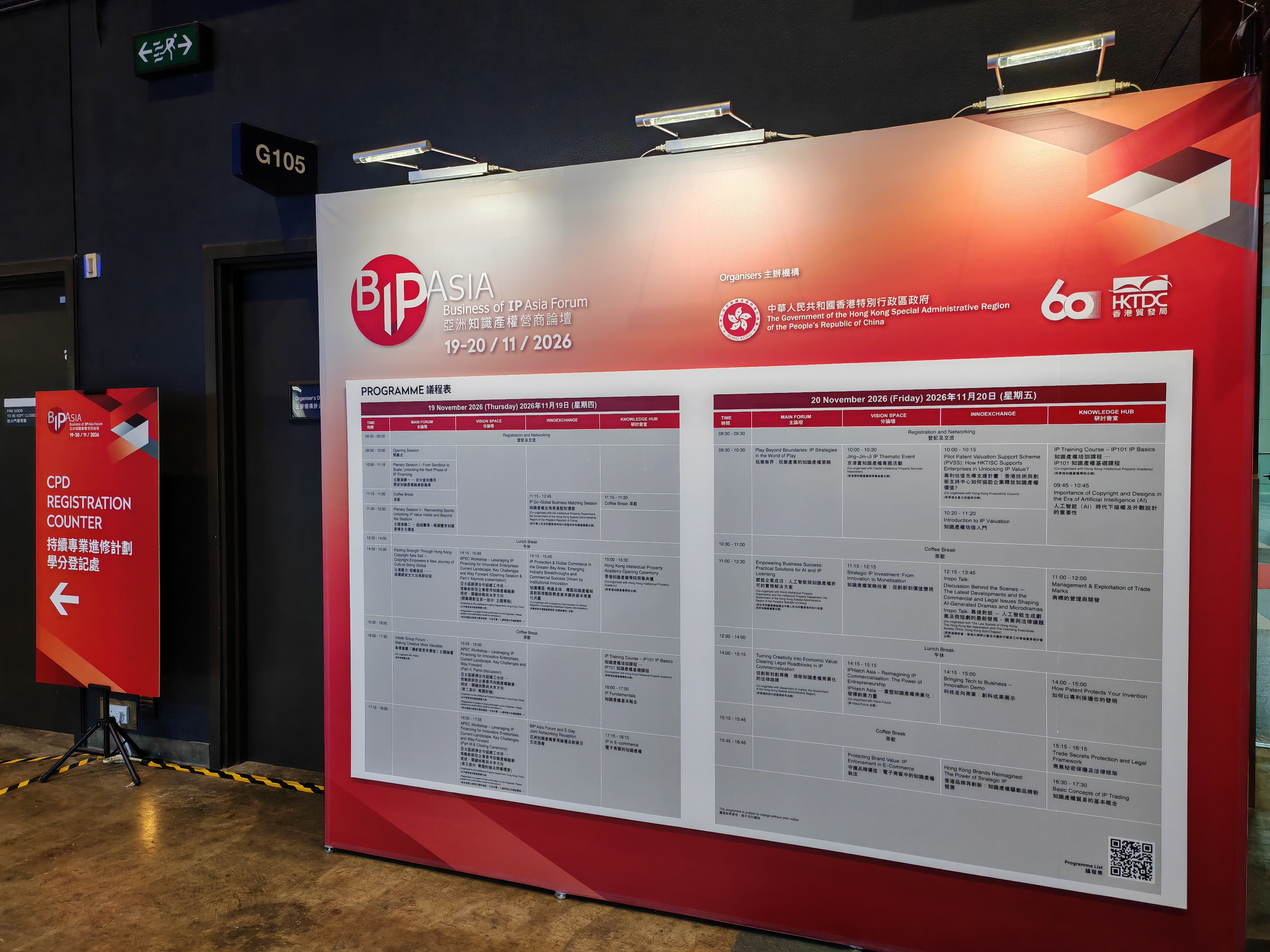
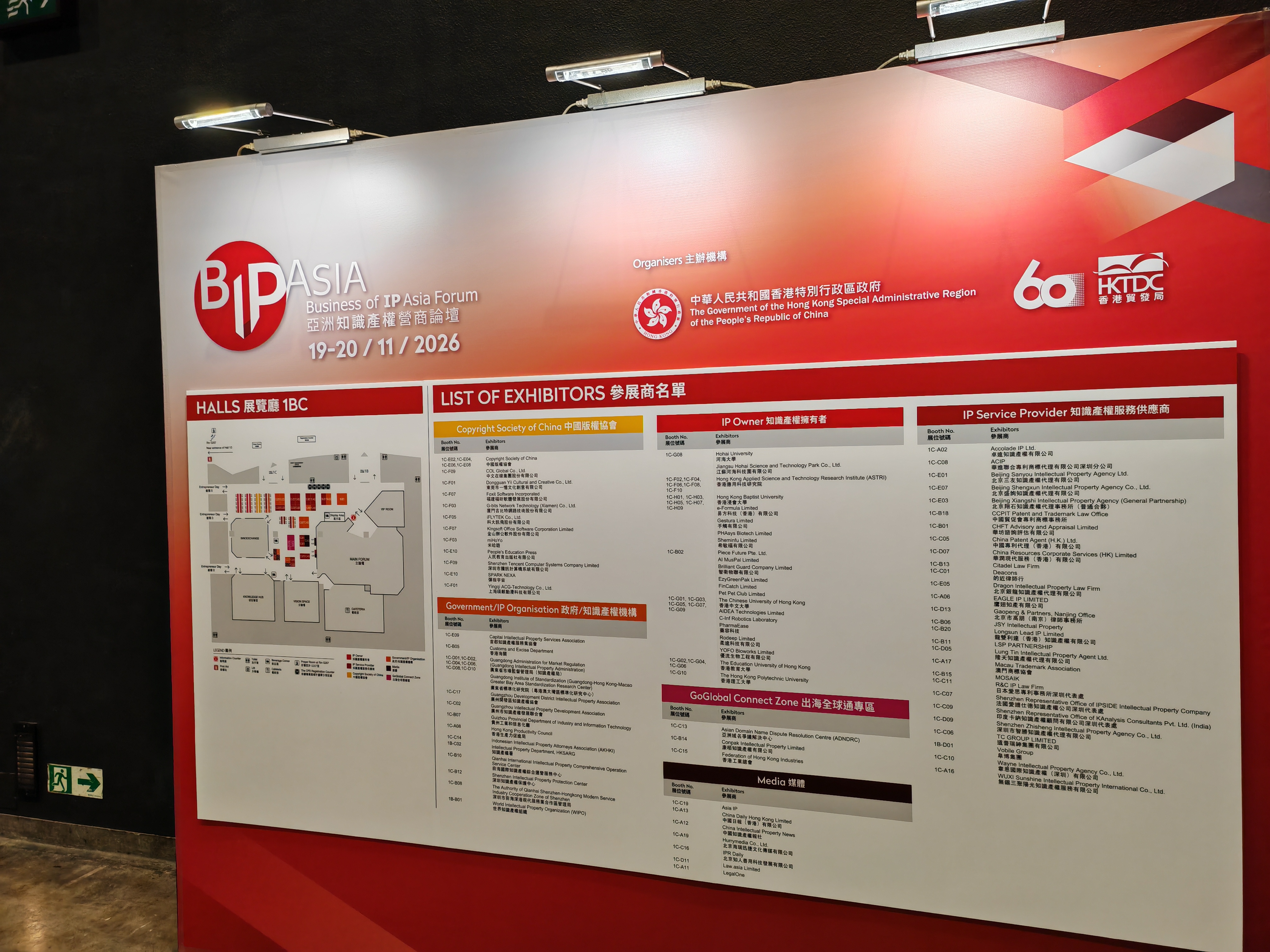
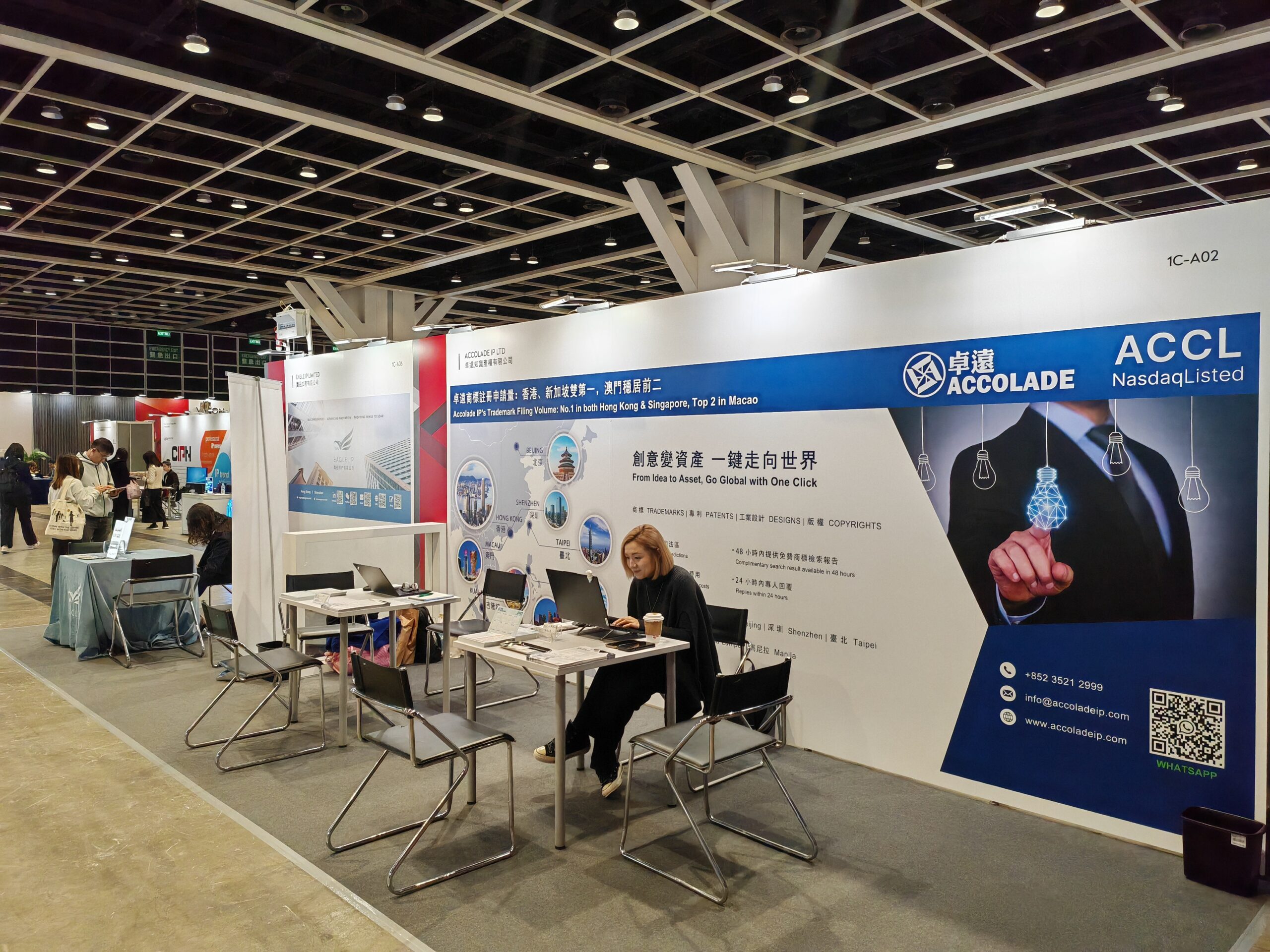
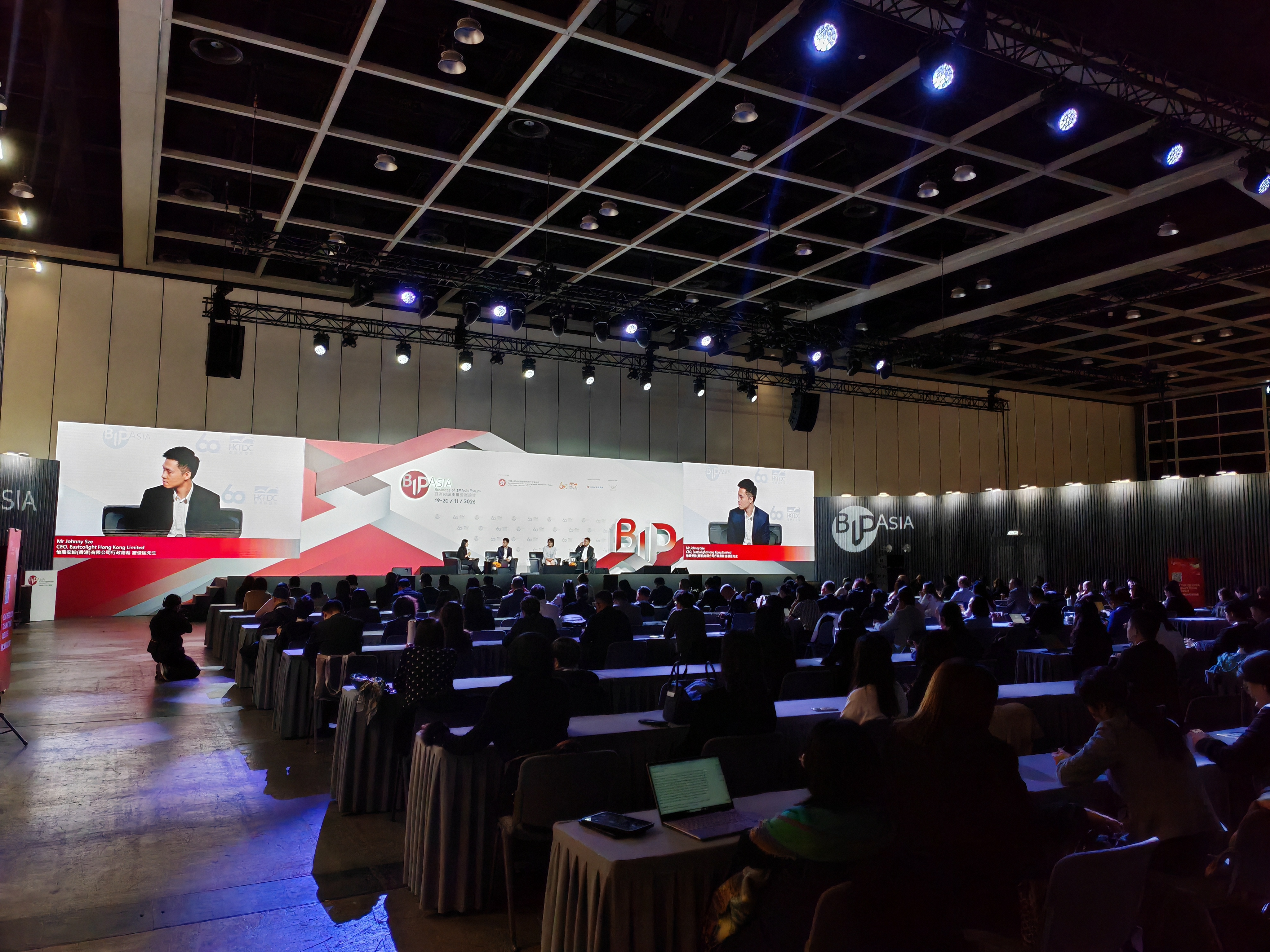
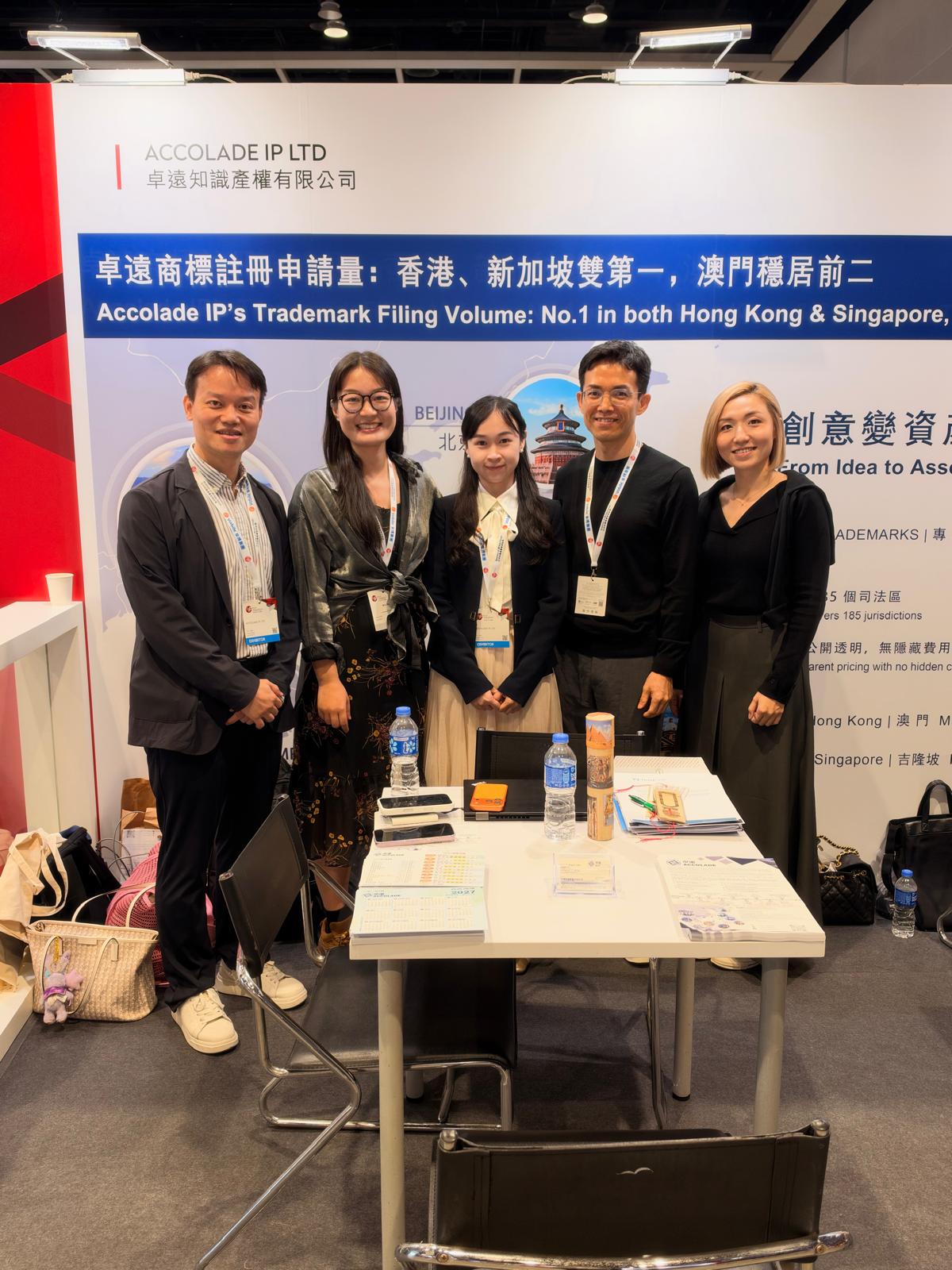
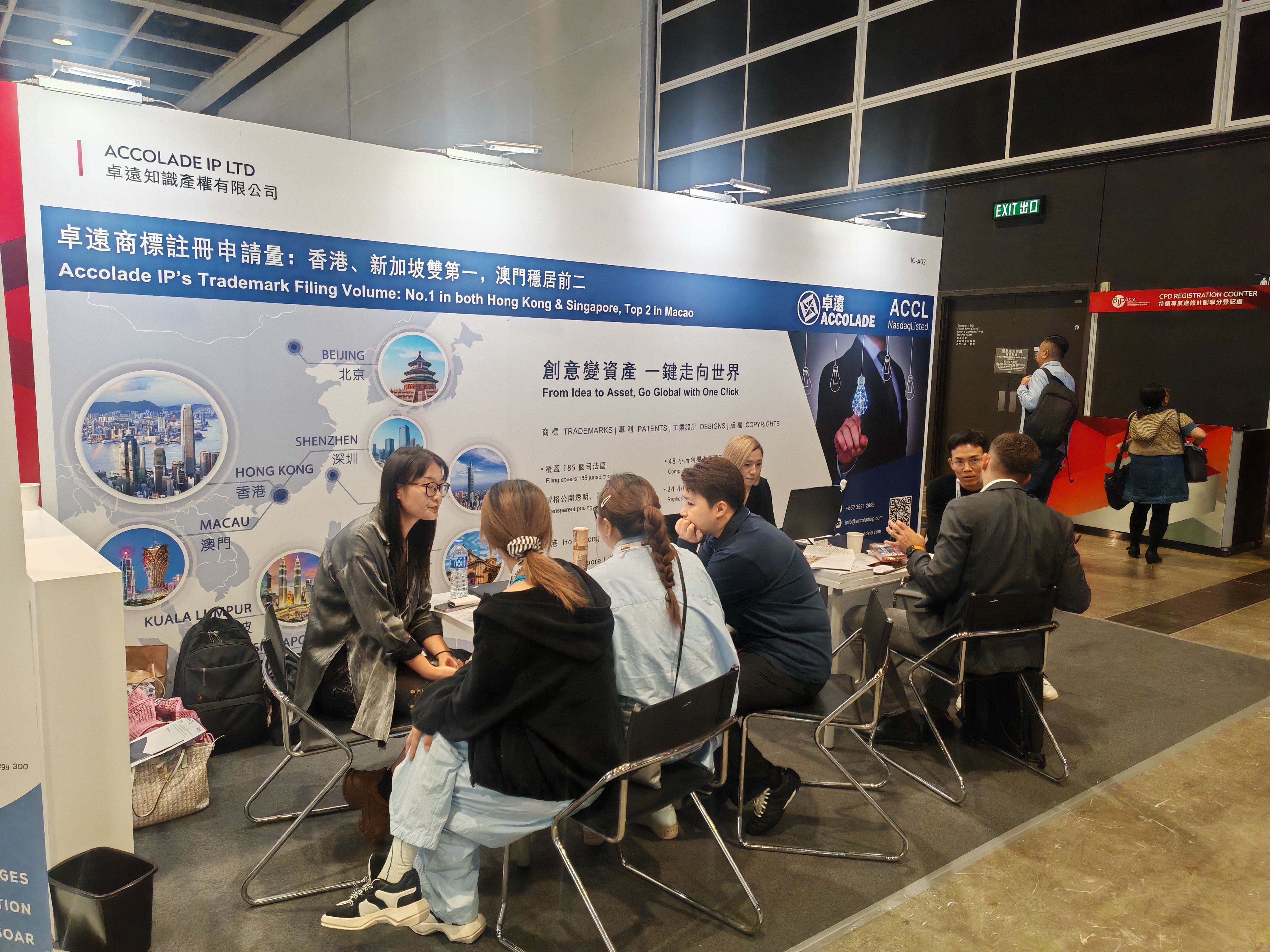
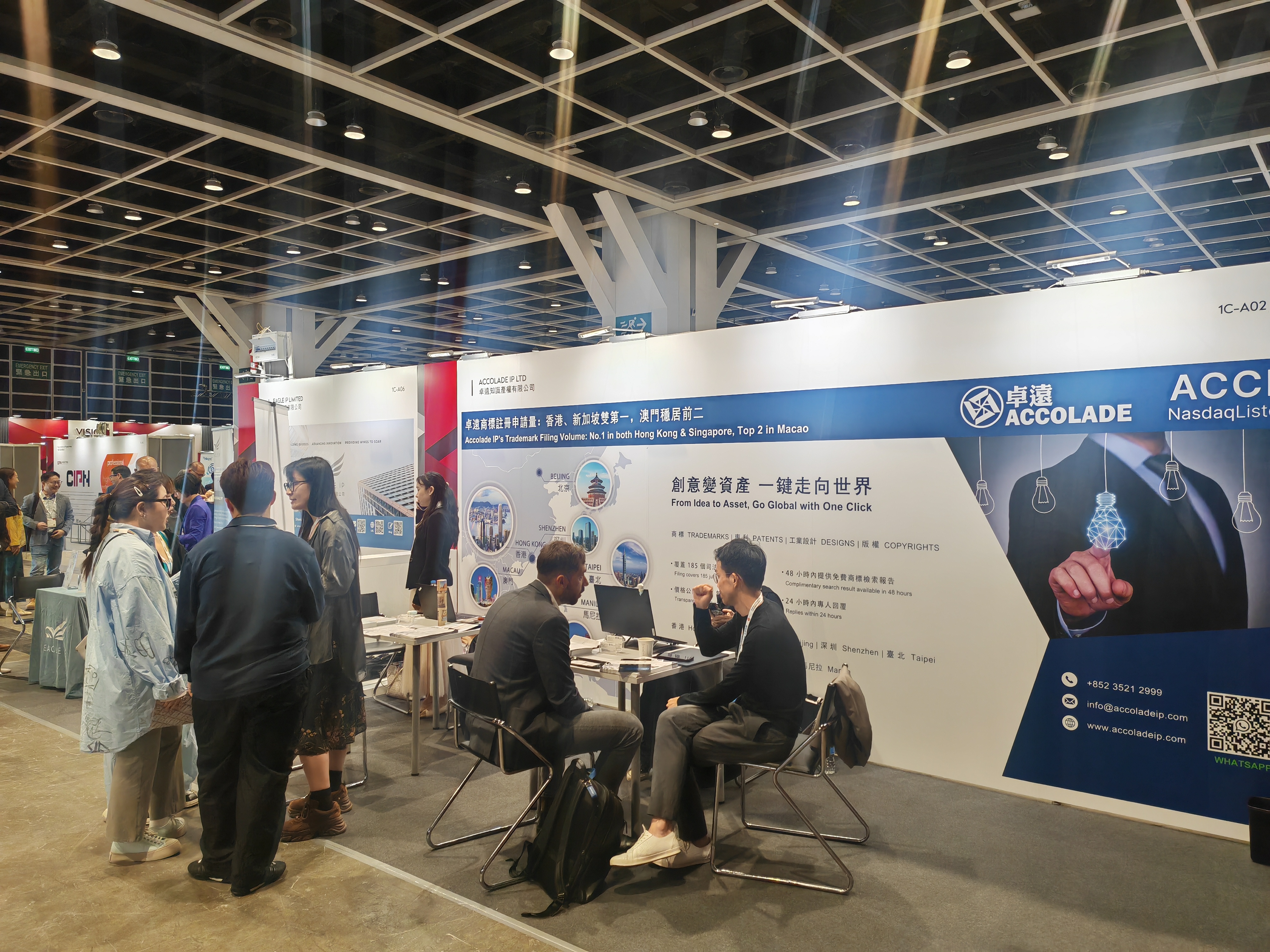

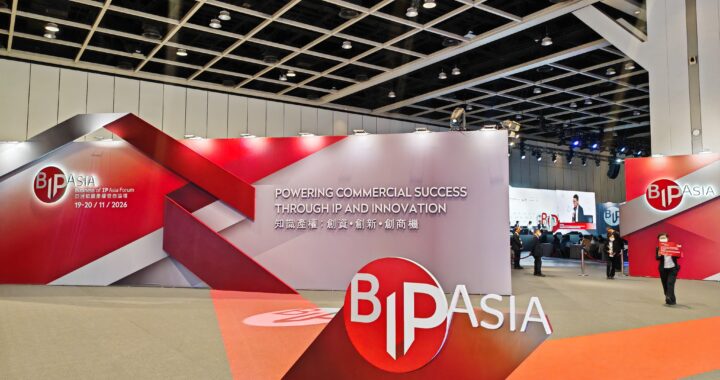
The Accolade IP team attended the 16th Business of IP Asia Forum (BIP Asia Forum 2026) in Hong Kong, joining intellectual property professionals, business leaders and industry representatives from different markets to exchange perspectives and explore the latest developments in intellectual property and innovation.
Held under the theme “Powering Commercial Success through IP & Innovation”, this year's forum explored how intellectual property and innovation can support business collaboration, investment, transactions and sustainable development, while unlocking greater commercial value for businesses.
Key topics included IP financing and valuation, IP commercialisation, technology transfer, brand development, and IP management and enforcement. These discussions highlighted the increasingly strategic role of intellectual property in business growth, innovation and competitiveness across global markets.
Through participation in industry forums and professional exchanges, Accolade IP remains engaged with the evolving IP landscape, connecting with industry peers and gaining perspectives on emerging opportunities and challenges.
We believe intellectual property is more than a means of protecting innovation. It is a strategic business asset that can help companies create value, expand into new markets and support long-term growth.

After years of R&D and multi-million peso investments, your product is finally ready for mass production—only to see near-identical competitors appear soon after launch. What hurts most is not one lost order, but the loss of the exclusive market window that should have been yours. Patents are more than legal certificates: they shape company valuation, fundraising leverage and bargaining power.
For R&D teams, a patent converts proprietary technology into a manageable commercial asset. It substantiates technical barriers in funding rounds, provides a basis for licensing negotiations, and makes your competitive edge clearer to investors and partners. For resource-limited startups, planning early and locking down core technology usually beats reacting after the fact.
| Protection type | What it protects | Examples |
| Invention Patent (20 years) | Technical principles, functional structures, manufacturing methods; substantively examined, typically 2 to 4 years | New battery structures, medical device mechanisms, smart sensing methods |
| Utility Model (7 years, non-renewable) | Practical improvements to products; no substantive examination, a registrability report can be requested; typically 6 months to 2 years | Equipment structure improvements, tool component refinements |
| Industrial Design | Product appearance, shape, lines and patterns; formality examination only, typically 6 months to 5 years; up to 15 years of protection | Headphone designs, appliance casings, packaging |
The most robust strategy is a dual-track defence: protect how the product works through a patent or utility model, and how it looks through an industrial design. Utility models are quicker to obtain but are not substantively examined, so the stability of the right should be assessed by your attorney.
To obtain a patent in the Philippines, an invention must be novel, inventive and industrially applicable. The most common fatal mistake is disclosing before filing: product demos, crowdfunding campaigns, trade shows, social media posts or detailed specifications shared with prospects. The Philippines provides a 12-month grace period for inventions and utility models, but it applies only in specific situations rather than to every disclosure, and most overseas markets do not have a grace period at all. The golden rule: keep it confidential first, file before you disclose.
A team can file in the Philippines first and claim Paris Convention priority within 12 months to file elsewhere. If you are targeting Mainland China, the US, Europe or other Southeast Asian markets, a PCT international application is a common deferral strategy, giving you roughly 30 months from the earliest priority date to choose national phases; the deadline for Philippine national phase entry is likewise 30 months (with a one-month grace period on payment of a fee). IPOPHL is itself an International Searching Authority and International Preliminary Examining Authority under the PCT. A PCT filing does not become a patent on its own; each country still examines under its own rules. In the Philippines, for example, substantive examination must be requested within 6 months of publication (or of national phase entry).
A forward-looking patent strategy should not just block copycats; it should generate income. Licensing lets other companies use your technology for a fee, and cross-licensing suits parties holding complementary technology who want to reduce friction and speed up development. A well-drafted portfolio also helps founders explain technical scope, competitive advantage and business models in financing or M&A discussions.
The hardest part of patent filing is translating technical language into precise legal language. The claims define your protection: too narrow, and competitors design around them; too broad, and they may fail for lack of support or patentability. In the Philippines, non-resident applicants must appoint a local agent or authorised representative to file, and a professional patent attorney also helps you decide which innovations deserve protection, sequence your filings, avoid novelty-destroying disclosures, and tailor strategy for each market. Accolade provides global trademark, design, patent and domain name services.
Preparing a product launch, trade showcase or funding round? Contact Accolade’s IP team for a preliminary patent evaluation and turn your R&D investment into a lasting competitive advantage.

A brand name, logo and other distinctive elements are valuable business assets. They help customers identify a company's products and services, build brand recognition and establish long-term commercial value.
However, many business owners assume that registering a company or business name automatically protects their brand. This is not the case. Business registration and trademark registration are two separate legal procedures. Registering a business does not automatically grant exclusive trademark rights over its name or logo.
For businesses establishing a brand, launching products or expanding into the Philippine market, understanding the local trademark registration system is an important step towards protecting their intellectual property.
Business registration establishes a company's or business's legal identity. Trademark registration, on the other hand, protects distinctive signs used to identify the source of goods or services.
Even if a business has completed its registration with the relevant authorities, this does not automatically give it exclusive rights to use the same name or logo as a trademark across all goods and services.
If a proposed brand name or logo is identical or confusingly similar to an existing trademark, it may encounter objections or opposition during the registration process.
Businesses should therefore consider conducting trademark searches and assessing registration availability before investing heavily in branding, packaging and marketing activities.
A trademark search is an important first step in developing a brand protection strategy.
Before submitting an application, businesses should check whether identical or similar trademarks have already been registered or applied for with the Intellectual Property Office of the Philippines (IPOPHL).
A proper search should consider more than exact matches, including:
The Philippines follows a first-to-file trademark system. Conducting searches and filing applications early can help businesses reduce the risk of another party securing rights to a similar mark first.
Trademark protection is linked to the goods and services specified in an application.
The Philippines follows the Nice Classification system, which divides goods and services into different classes. Applicants should select the relevant classes based on their current business activities and future plans.
For example, a company may sell physical products while also providing online retail, consultancy or other services. Applying for only one class may not provide sufficient coverage for all its business activities.
Businesses should carefully identify the goods and services they intend to protect and select the appropriate classes as part of their trademark strategy.
Trademark applications in the Philippines are handled by the Intellectual Property Office of the Philippines (IPOPHL). The general process involves the following stages:
Assess the distinctiveness of the proposed mark, identify potentially conflicting trademarks and determine the appropriate goods and services classes.
Trademark applications in the Philippines are filed electronically through IPOPHL's eTMFile system. Applicants must submit the required information and documents and pay the corresponding government fees.
IPOPHL examines the application in accordance with the Intellectual Property Code of the Philippines and relevant regulations. Applicants may be required to provide additional information or respond to examination objections where necessary.
If the application passes examination, the trademark is published in the IPOPHL e-Gazette for opposition purposes. Any person who believes that they may be damaged by the registration of the mark may file a verified notice of opposition within thirty (30) days from the date of publication.
Upon proper motion stating meritorious grounds and payment of the applicable fees, the Bureau of Legal Affairs may grant a one-time extension of forty-five (45) days to file the opposition. No further extension is allowed.
If no opposition is filed within the applicable period, or any opposition is resolved in the applicant's favour, the application may proceed to registration, subject to the required formalities and fees.
Businesses may notice the symbols TM and ® displayed alongside brand names or logos. However, they do not mean the same thing.
Using TM or ® does not replace the legal process of trademark registration. The existence and scope of trademark rights depend on the applicable law and registration status.
A trademark registration in the Philippines is generally valid for ten years from the date of registration and may be renewed for successive ten-year periods.
However, trademark owners must also comply with the Declaration of Actual Use (DAU) requirements to maintain their registrations.
Under IPOPHL's current maintenance requirements, a DAU must generally be submitted:
For the third-year DAU, a one-time extension of six (6) months may be requested before the original deadline, subject to payment of the applicable fees.
The DAU must be supported by acceptable evidence demonstrating actual use of the trademark in the Philippines. Failure to comply with the applicable requirements may result in refusal of a pending application or removal of a registered trademark from the Register.
Businesses should therefore monitor their trademark deadlines carefully, even after registration has been obtained.
Trademark rights are territorial. A trademark registered in the Philippines does not automatically receive protection in other countries or regions.
The Philippines is a member of the Madrid Protocol. Eligible applicants may therefore consider using the Madrid System to seek trademark protection in multiple member jurisdictions through an international application, subject to the applicable requirements.
Businesses should assess their target markets, business plans and intended use of the brand before deciding on an international filing strategy.
Building a successful brand requires time, investment and consistent effort. From naming and product development to marketing and customer engagement, each stage can contribute to a brand's commercial value.
Without appropriate trademark protection, businesses may face disputes, rebranding costs or obstacles when entering new markets.
Trademark registration is therefore more than a legal formality. It is an important part of brand management and long-term business planning.
Accolade IP can assist businesses in understanding trademark searches and registration arrangements, helping them develop an appropriate intellectual property protection strategy.



(超過180個司法區)
Error: Contact form not found.
Error: Contact form not found.
Error: Contact form not found.
Error: Contact form not found.
WhatsApp us